
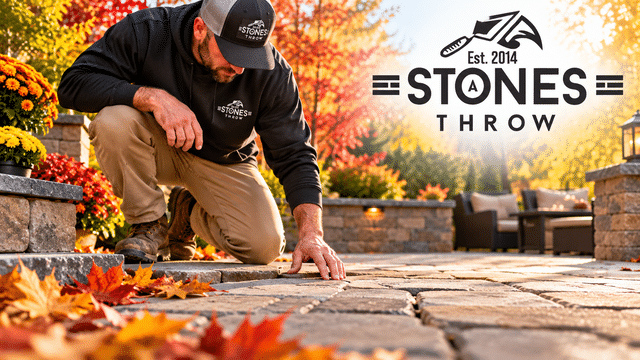
Quick Answer
Yes. Fall is a good time to check your patio, walkway, steps, and other hardscaping before freezing weather arrives. Loose pavers, cracks, settling, drainage problems, and failing joints can all become more noticeable after repeated freezing and thawing.
Taking care of small problems now can help protect the area and make it safer to use through the colder months.
October has a way of showing you what needs attention.
Leaves collect in low spots. Rainwater sits where it shouldn’t. A paver that seemed only slightly uneven in summer suddenly feels more obvious when you walk across it.
At A Stone’s Throw, we encourage homeowners to take a close look at their outdoor spaces before winter arrives.
Are Any Pavers Loose or Uneven?
A loose or raised paver may not seem like a big deal.
But uneven surfaces can become tripping hazards, especially once leaves, frost, or snow cover them.
Settling can happen for several reasons, including movement in the base material, drainage issues, or normal wear over time.
The important part is figuring out why the area moved before simply putting the paver back in place.
Are You Seeing Cracks in Stone or Masonry?
Cracks deserve attention before winter.
Water can work its way into small openings. When temperatures fall below freezing, that water expands.
Repeated freezing and thawing can put more stress on already damaged areas.
Look closely at patios, steps, walls, stonework, and masonry joints. Small cracks may stay small.
Others may be telling you that movement or drainage is creating a bigger problem.
Does Water Sit on Your Patio or Walkway?
Drainage is one of the most important things to check.
After a good rain, look for areas where water pools instead of moving away.
Standing water may point to low spots, settling, grading issues, or drainage problems.
That matters because water sitting around hardscape surfaces can become even more troublesome once freezing weather begins.
It can also create slippery areas around steps and walkways.
Are the Joints Between Pavers Breaking Down?
Take a look between the pavers.
Are the joints washing out? Are weeds growing through more than they used to? Does the surface feel less stable?
Joint material helps support the system and keep individual pavers from moving more than they should.
When joints begin to fail, it may be time for maintenance before winter weather adds more stress.
What About Steps and Retaining Walls?
Do not forget the areas around the patio itself. Check steps for movement, cracks, or uneven surfaces.
Look at retaining walls for leaning, bulging, shifting blocks, or areas where water appears to be collecting behind or around the wall.
These are not always simple surface repairs.
Movement can sometimes point to problems with drainage, base preparation, or soil pressure.
Should You Wait Until Spring?
Not necessarily. Some outdoor projects depend on weather and temperature, but fall is still a good time to have the area evaluated.
Even when a repair cannot or should not be completed immediately, understanding the problem now helps you plan instead of discovering a much larger issue in spring.
What Should You Check Before Winter?
Take a quick walk around your property and look for:
- Loose or rocking pavers
- Uneven walkways
- Cracked stone or masonry
- Failing joints
- Water pooling
- Settled areas
- Loose steps
- Retaining walls that appear to be moving
- Dark or poorly lit walking areas
That last one matters too.
With shorter fall days, outdoor lighting can make walkways, steps, and entrances easier and safer to use after dark.
Is It Time to Have Someone Take a Look?
You do not need to know exactly what is causing the problem.
You just need to notice what has changed.
At A Stone’s Throw, we work with patios, walkways, stone and brick masonry, steps, retaining areas, outdoor lighting, and custom outdoor spaces.
Should your patio or walkway be showing signs of movement, cracking, drainage trouble, or wear, fall is a good time to take a closer look before winter settles in.